
Seal of Approval Now Accepting Submissions

We’ll be accepting submissions for the Seal of Approval from April 1-30.

If you meet the qualifications below, consider applying now!

Purpose

The purpose of the Catholic Writers Guild Seal of Approval is to help Catholic bookstores and venues in their determination of the Catholicity of a work. This reassurance from a professional organization can assist authors in marketing and promoting their works.

Our Process

Submission and awarding periods as follows:

  • Accepting submissions January 1-31, awarding by March 31
  • Accepting submissions April 1-30, awarding by June 30
  • Accepting submissions July 1-31, awarding by September 30
  • Accepting submissions September 1-30, awarding by November 30

Requirements

For a book to be considered for the Catholic Writers Guild Seal of Approval:

  • Book is published OR will be self-published OR book is under contract with a publisher
  • Author must be Catholic
  • Book is Catholic in nature (for fiction, this means Catholic themes and characters)
  • Book does not contradict nor disparage Catholic teaching
  • Book does not speak disparagingly of an accepted Catholic practice (such as Novus Ordo Mass or Tridentine Mass) nor give the impression that only a particular Catholic practice is the right way to salvation.
  • Book does not support heresies or New Age philosophies

One of the concerns we face as an organization is the quality of the work we stand behind. While we do reject titles when we have concerns with poor editing, there is now the opportunity for one resubmission with proof of professional editing.

We may request up to five hard copies and/or electronic copies for our evaluators.

The Seal of Approval application is here. If you are a Catholic Writers Guild member, you may apply free of charge. If you are not a Guild member, there is a processing charge.

We also need volunteer evaluators!

To be an evaluator, you have to be a member in good standing with the Catholic Writers Guild. To evaluate a book, you read the title you sign up to read and complete the evaluation form. We ask that you have some background in the Catholic faith and that you are willing to look up things that may be questionable.

All evaluations must be true and faithful to the Magisterium of the Catholic Church.

What we evaluate:

  • Is the work libelous or slanderous?
  • Does the work seek to foster hatred or conflict among individuals or groups, including racism, religious fanaticism, or anarchy?
  • Does this work contain obscenity or promote anti-Catholic views of modesty, decency in language, actions, or basic morality?
  • Does this work contain pornography?
  • Does this work promote pre-marital, extra-marital, or other non-marital sexual relationships?
  • Does this work lack respect for the reasonable privacy of others?
  • Does this work degrade the dignity of the person, including the promotion of euthanasia, abortion, homosexual actions or unions, child labor, or prostitution?
  • Does this work promote the worship of false gods?
  • Does this work attempt to draw others away from the orthodox teachings of the universal Catholic Church?
  • Does this work use others’ proposals or ideas without credit or permission?
  • Does this work present others’ work as the author’s own original ideas?
  • Does this work violate any known laws?
  • Does the author of this work belong to an association(s) or participate in activities that may compromise integrity, damage credibility, or cause scandal in the Guild’s sole determination that you are aware of? Examples include freemasonry, Catholics for a Free Choice, NAMBLA, a history of works opposed to the Guild’s values or ethics, excommunication, etc. For example, these may be stated on the book jacket or may be from your prior knowledge of the author.
  • Is this work so badly written or edited that granting the Seal of Approval would harm the reputation of the Catholic Writers Guild as a writers organization?
  • Can you see this book in your local Catholic bookstore?

We have a “theological experts team” that is on-hand to answer any issues we have with doctrinal issues.

If you’re interested, email us at SOA -a-t- catholicwritersguild.com

Meet the committee:

  • Sarah Reinhard, Fearless Chair (or Big Boss Lady, depending on the day)
  • Carol Ann Chybowski, Submissions and Evaluator Coordinator
  • Mary Gildersleeve, Awarding Coordinator

If you’re interested in learning more about the Seal of Approval, email us at SOA -at- catholicwritersguild.com.

Vice President’s Column/SOA

The Catholic Writers Online Conference has come to a close. There have been 34 presenters with nearly 50 chats and many different forums.  Attendees of the online conference heard about marketing, writing tips, self-publishing and various other topics.  I attended many of the chats and, as usual, learned a lot and enjoyed every moment.

I feel blessed that I can network with fellow Catholic writers from the comfort of my own home.  Another reason to love the 21st century.

If you missed the online conference, I highly recommend you attend next year (March 4 -15, 2013).

Besides serving as Vice President for the Catholic Writers Guild, I am also the editor and creator of the Catholic Books News, a monthly newsletter that is sent out to nearly 500 Catholic bookstores and libraries all over North America.

If you have written a book and would like to promote it to Catholic bookstores and libraries all over North America, consider submitting it to the Catholic Writers Guild for the Seal of Approval.  If your book is approved, it will be showcased in a future issue of the Catholic Book News.  To find out more information about the Seal of Approval, check out this blog post by Sarah Reinhard: https://blog.catholicwritersguild.com/2012/02/the-new-and-improved-seal-of-approval-process.html

Each issue of the Catholic Book News showcases one non-fiction book and one novel, a short synopsis of each book, information on how to order each book and endorsements and reviews.

If you would like to receive the Catholic Book News, please leave a comment below or email me at [email protected] and I’d be glad to add your name to the mailing list.

RAH-RAH ROOTING FACTORS! How to make your readers love your characters as much as you do.

What’s one of the biggest reasons you keep reading when you pick up a new book? Think about it for a moment. For me, it’s characters who are interesting, multi-dimensional, unpredictable…and likeable. Yet this is an element many of us struggle to achieve. One of the most common phrases in rejection letters is “I just didn’t connect with the character(s).”

So, what does that mean to us, as fiction writers? It means we must draw our readers into the story with the very first sentences, and to get them invested in the characters well before the end of the first chapter, maybe by the end of the first page. This is a tall order—especially when we read our favorite authors and marvel at how easy they make it look.

I don’t know about you, but I can see my characters vividly in my mind’s eye, and am truly astonished when my critique partners don’t fall in love with the characters. Passionately! As an author, it is incumbent upon me to portray those characters with all the tools at my disposal. I’d like to share a technique that is simple, yet extremely effective.

Rooting factors. Yes, as in rah-rah, go hero/ine! These are characteristics that show your hero or heroine in an endearing light. Details that allow the reader to bond with them…to root for them. What you’re after is any trait that is positive, but especially universal ones like humanity, vulnerability, generosity, etc.

As Blake Snyder says in Save the Cat, an excellent resource on screenwriting, the opening scene is critical. We must give the reader a reason to like our hero or heroine, even if (or especially if) they have rough edges or have a lot of growing to do through the book. In Snyder’s example, the character swerves from his purpose (which can be dark or suspenseful or comic) in order to do a good deed…i.e., save the cat from certain calamity. This demonstrates our hero’s kind side, and when he goes on to shock or distress us with his struggles, we recognize that he is a good person who has been forced into an untenable situation. And we root for him!

This is what keeps readers turning the pages, this ‘liking’ the characters. Go to your favorite novel. Right now. Open it up and analyze the first chapter for characteristics that are likable (and therefore create a bond with the reader). Chances are, you’ll find a fairly long list.
Be careful to salt these rooting factors in carefully. They must be organic to the story and the writing. This should never be a laundry list. “The heroine was feisty, yet compassionate, and she was bluntly honest without being cruel, and her moral compass never wavered.” No. Work the rooting factors into the normal activities of the character’s world. Use dialogue and action to show why the character deserves the reader’s investment.

This is a particularly effective technique for characters who may not be all that likable at the beginning of the story, those who have a long way to go before they learn their life lesson or earn their reward. They have legitimate flaws. That’s what makes them interesting. But they also have some innate goodness that allows the potential of redemption. Here’s a secret regarding the villain: the most compelling villains have some good traits, too. After all, the worst part about villains is that we can see ourselves in them.

Here’s an example from my current work in progress. I have a potentially difficult task. My heroine has just been released from prison and is looking for a job. In the first sentence, she demonstrates a deep level of respect for her fellow man when she murmurs “Excuse me” to a pedestrian who bumps into her. And she does so without regard to the discomfort, even anxiety, the other person’s proximity causes her—which demonstrates her vulnerability and humanity. What’s not to like about our heroine, right off the bat? A page later, she picks up a plastic bag out of concern that small animals might get trapped in it. Her prison history, while central to the story, is not revealed until the end of the chapter. And by the time the reader gets there, hopefully s/he is so invested in the character that they are willing (and eager) to read further.

Here’s your homework assignment: Reread the first chapter of your current work. Can you ramp up rooting factors for your characters? See what you can do, and if it improves the work. It has mine, and it took me four years too long to figure out. I hope it’s not as long for you!

30K for Christ Coming in April

In April, we’ll again be hosting the 30K for Christ Writing Challenge.  This is a CWG Members and Guests only challenge

What is 30K for Christ?  In the month of April, we challenge you to write 30,000 words.  In one sense, it’s like NaNo, because words count, but that’s where the similarity ends.  You can write those 30,000 words in any way you want—from novel draft to non-fiction book proposal to blog series.  However, for them to count, you must dedicate them to Christ.

What’s the purpose of 30K for Christ?  As Catholic writers, we are called to use our talent responsibly for the betterment of the world and for the coming of Christ’s kingdom.  This doesn’t mean we have to write only devotionals and apologia, but that whatever we write, we remember to uphold the virtues that Christ called us to live.  During 30K for Christ, we develop or hone our awareness of our responsibility of bringing the Light of Christ to the world.

How do I participate in 30K for Christ?

1.   Anyone striving to follow Christ can take part in the challenge, but only those registered on the Catholic Writers Guild website can actively participate.

2.  Post your intention on the CWG forum: https://catholicwritersguild.com/index.php?name=Forums&file=viewforum&f=83.  There will be a graphic there you can post on your website, twitter, etc.

3. Before you start writing, pray.  Take a minute or two to connect with Christ.  If you need a prayer, here is the official CWG prayer:

Holy Family, Guide our minds, our hearts, our hands, as we write, speak, illustrate – help our words to live in union with the Word.  Teach us discipline and skill to use the talents God gives us. Give us also insight and courage to convey God’s love through our craft, and humility to be open to His divine will, shaping our lives, in loving loyalty to His Church. In Christ’s name, Amen.

4.  Write, keeping in mind the great gift and responsibility God has given you with your talent.

5.  Track your progress.  We’re on the honor system.

6.  Report your progress on the forum.

7.  When you his 30K, we’ll send you a nice graphic you can put on your website.


Questions?  Post them on the forum or in the comments section of the blog.

RIP Walt Staples

Many of you know Walt Staples from the Guild and online conferences.  I’m saddened to have to tell you that he died Wednesday afternoon, March 14, of natural causes.

Walt was a very talented writer, with a quirky sense of humor and a unique world view.  He was prolific, especially in the past few years.  One of his favorite playgrounds for stories was the shared universe of Avenir Eclectia (https://www.avenireclectia.com/).  Publisher Grace Bridges said he accounted for nearly a quarter of the stories there.  He also loved writing stories in his small “Suthern” Danube County, and when Karina Fabian started a blog about the space industry, he pitched in each Saturday with a story about growing up during the space race.  Nonetheless, he was never interested in payment.  He used to say it was too much trouble finding a publisher–and it’d ruin his “amateur status,” anyway.  He just liked to tell stories.

He also had a voracious appetite for books, fiction and non-fiction, especially history but also geology, space, and anything that caught his fancy.  He had the same appetite for news, and often forwarded the zaniest articles, accompanied by snide comments, to his many victims—er, friends.  He had several pen pals, electronic and hand-written.

He gave unselfishly.  He served as President of the CWG for a while and taught workshops at the online conference, before his wife developed medical problems and he quit all that to better concentrate on her.  He was very conscientious about her care, and about making sure she had enough books for her Kindle.  Even in the height of stress, he didn’t complain much; just soldiered on because he knew people needed him—and he kept his good outlook and his humor through it all.

They found him at a bus stop, where death took him suddenly and unexpectedly, with his family waiting for him at home and books and letters en route from pen pals.  He was greatly loved and will be greatly missed.

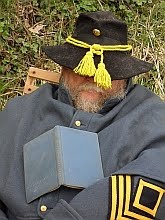
This was one of his publicity shots. He never showed his face. Other photos include the back of his head and him kissing his wife, Jan, behind a hat. Some of his friends never knew what he looked like, but it was his heart and mind that mattered.

Rest peacefully, Walt.  We’ll meet again.

The Stigma of Self-Publishing

I am the self-published author of four books.  Three of my books are currently on various bestsellers’ lists on Kindle.  My second novel, In Name Only, won a Gold Medal in Religious Fiction in the 2010 IPPY Awards (the first Catholic novel to win this award).  It has been #1 in its category for nearly three months (dropping to #2 for two weeks when my third novel Stealing Jenny took over the #1 position). Stealing Jenny is #2 in one category and has been in the top 20 of four other categories for three weeks.  In the past year, my books have been downloaded by tens of thousands of readers. And yet, when I recently asked a local Catholic newspaper if they would write a review of my latest book, they replied, “We don’t review self-published books.”

Another time, I attended a large “book fair,” where hundreds of local authors set up tables and sold books.  There were other self-published authors at this event. At first glance, however, it wasn’t obvious that I was a self-published author. My books had professional looking covers and book trailers.   I sat beside a published author who began conversing with a prospective reader.  “Did you self-publish your book?” the reader asked.  “Oh, no, I would never have done that.  My books are published by a reputable publisher.”  She would never have stooped so low as to self-publish.  Ouch.

Self-publishers have come a long way.  Years ago, authors who took the “vanity” publishing route were rarely taken seriously and they rarely sold more than a few books.

That attitude has improved in the seven years since I published my first novel, although many professionals in the publishing industry and some traditionally-published authors continue to have a bias against self-published authors and books.

I believe part of the reason is because self-publishing is so easy nowadays that just about anybody can do it and the quality of some self-published books is poor.  Some naive first-time authors think they can do it all.  Some newbies think that they are great writers  and don’t “need” an editor. Novice authors often think they can design their own cover without any sort of advice from a visual designer.  I have seen more than a few self-published books in my capacity as reviewer for Catholic Fiction.net in which the quality of writing was so bad I won’t even review it.

Another reason there may be a negative bias toward self-publishing could be the belief that self-published authors wouldn’t be able to get published by a traditional publisher or that perhaps they have already been rejected.  This may be true for some self-published authors. But consider the case of self-published millionaire, Amanda Hocking who was rejected by traditional publishing houses and who is selling 100,000 books per month on Kindle.

On the one hand, I understand why some newspapers, magazines and websites need to have a blanket rule in place for self-published books (since there are many poorly written self-published books).  On the other hand, I have also read extremely well-written novels by authors who self-published: Elena Maria Vidal, Gerard Webster, Christopher Blunt, Krisi Keley, Regina Doman, to name a few.

Although self-publishers have come a long way, we have not arrived yet with regard to “stigma” of self publishing. Despite the stigma, I don’t believe I would ever go the traditionally published route.  After self-publishing four books  (with lots of assistance) and after having 100 percent of the control, it would be hard to give my books to a publishing company.  For me, it would be like giving my baby away to someone else to raise.

The stigma and negative bias of self-publishing will likely not disappear completely.  However, if self-published authors continue to publish quality books, sell to thousands of readers and raise the bar for self-published books, it will hopefully lessen the stigma.

To learn more about self-publishing, I’ll be giving two chat presentations at the Catholic Writers Conference Online in March:  Self-Publishing and Kindle e-books.

Copyright 2012 Ellen Gable Hrkach     Images purchased from iStock

Members: We Need You!

You can probably guess from the topic and from that fact that it’s from me, that this is a call for volunteers.  It seems that my purpose in the Guild, whether as founder, President, or Committee Coordinator, has been to beg for people to help with our projects.  Maybe one day, I’ll work myself out of a job?

The sad fact is that the Guild has several wonderful projects and important functions that are floundering because we don’t have enough folks.  This past year, many folks have dropped out because of family illnesses, economic troubles, or sometimes for happier reasons like getting a new job.  We really need some folks who can devote an hour or so a week, or maybe a few hours one weekend a month–and we need a few people who will jump in to lead some of these projects.

Sometimes, its hard to know what you can help with.  To that end, I’m creating a talent survey.  This survey will have two purposes–it will help us know what Guild projects might interest you, but it will also let us know your skills so that when someone comes to the officers seeking a writer or illustrator for a project, we will know who to contact.  We have had several wonderful (and some high-paying) opportunities come through the Guild.

Please be on the lookout for the survey.  In the meantime, three of our committees have identified the following needs.

1.  Proofreader for the CWG Book News.  This is a monthly ezine of about 1500 words.  It only takes about 10 minutes to proof, but that second set of eyes is invaluable!

2.  Database workers:  All you’d need to do is input the information, not develop the database itself.  We need folks for the membership committee (inputting names, addresses, and such), and for building our contact list of magazines, radio stations, etc.

3.  Assistant to get guest speakers of the CWG Guest chats.  This person would assist the Guest Chat chairman with:

–Contacting writers, illustrators, publishers, etc. to join the Guild in a moderated chat on the topic of their choice.  (Kind of like the chat presentations at the online conference.)

–Scheduling someone to moderate and transcribe the guest chat.  Remember, this is only once a month.

4.  Assistant PR leader. This person would help coordinate the public relations activities.  This is probably the most time-intensive duty, but is still no more than a couple of hours a week during the heavy weeks (like right before the live conference) and perhaps an hour a week the rest of the time.

If you’ve been thinking about joining the Guild and cannot afford dues, we do allow volunteer work in lieu of dues.

If you can help with any of these, please contact me at coordinator(at)catholicwritersguild.com


Why 30K For Christ?

30K for Christ started (as many projects do) from a conversation in the chat room.  NaNoWriMo was coming up.  This was back when it was a new thing, but many of the folks in the chat were disappointed that they would not be able to participate because they were writing non-fiction, or wrote articles rather than long works.  They wanted a challenge that worked for them, too.

As we got to talking, we realized that as Catholics and writers, we have a calling to use our words to serve Christ and better our world.  Whether writing a Catholic apologetics article or a thriller or a humorous flash fiction piece, we needed to keep Christ in our hearts and minds as we wrote.

Thus, 30K for Christ was born.  The challenge is simple and broader than NaNoWriMo:  write 30,000 words in a month in whatever format.  It could be 30,000 words towards a novel or non-fiction book; 10 articles of 3,000 words each, even 30 pieces of flash.  (There’s a challenge—a story a day!)  Even work like press releases and blogs count.  The only stipulation is, you begin each writing session by dedicating it to Jesus and implore his guidance as you write.

The goal is not like NaNoWriMo:  We’re not seeking to turn off the internal editor to increase productivity.  Rather, we’re seeking to keep Christ present as our first editor, so that the words we produce are in keeping with The Word.

The first 30K for Christ challenge only had a few participants, but all agreed it helped them gain better awareness of the working of God in their life and writing.  The challenge went on hiatus for a couple of years, but another conversation in the chat room brought it back up.  This year, we’re hoping for more participants.

We’ll be signing up on the CWG forums*.  Please drop by and state your intentions.  Full instructions will be there, and on the blog March 22. Once April begins, check back now and again, post your progress and share encouragement and challenges.

BTW, if anyone would like to make a couple of icons (one Participant and one Winner), please e-mail me at karina(at)fabianspace.com.  It’s be great to have a little something for our blogs.

*Sorry, the program is for dues-paying members only.

Managing Multiple Personalities

Usually, in this space, I give you advice and pointers, but I find myself needing some direction and insight. Hey, I thought, why not tap into that group of writer friends over at the CWG blog?

Besides, this may be a problem you find yourself facing someday, so here goes.

I love social media. Most recently, I’ve discovered Pinterest, but my first love is Twitter. (If you don’t like or love or even get Twitter, no worries. I advise staying away if that’s the case. Don’t force it. Not so different from my ongoing advice about blogging, actually.)

Since I have a strong background in marketing (a whole degree, as the case may be), the thought occurred to me that, though I had firmly established myself in the Twittersphere as @peerybingle, I should make sure I also had user names that were part of my “brand,” namely @SnoringScholar (my blog name) and @SarahReinhard (my name).

Now, some might advise that I should trash @peerybingle (which is a reference to The Cricket on the Hearth) and go with my name. I’ve seen other well-known writers do that.

We sell books by our NAME, after all. We market who we are by our NAME, right? We are selling US, as in the NAME.

But…but…but! I LIKE @peerybingle. It’s fun, and, more importantly, it’s ME.

Oh, and, I’ve noticed there are other Sarah Reinhards. It’s not a unique name, really (though I like it very much, all the same).

There’s a business side of things. But for me, so much of what I do is ministry. So much of what I do is personal. And to get through the low pay and long hours, I have to enjoy myself to some extent.

What I’m trying to say is that @peerybingle STAYS. Period. It’s the “me” I like, the “me” I choose to be, and, really, the “me” who is honestly more like the Real Life Sarah than any of the others.

I have been manually managing things with my other identities using HootSuite. I’ve come up with some “rules” for how I use each identity:

–> My @peerybingle identity gets everything. My blog posts go there, as do links to all my columns and articles in other places, as well as all my thoughts throughout the day, links I like, and conversation. I follow people back, chime in, and get all goofy, serious, and Sarah.

–> For my @SarahReinhard identity, I only include links to my blog posts and links to other writing work I’ve done.

–> For my @SnoringScholar identity, I only include links to my blog posts.

YOUR TURN: Do you have this problem? What solutions have you found? I’m all ears (and eyes, as the case may be).

“Ah, Reviews”

It is fascinating to me how we are all so similar and yet so individually unique. Our perceptions of similar things we see and hear can be so different that it might seem impossible that we have witnessed the very same incident. Three people may witness a traffic accident, and by the time the police have asked each of them what they saw, they might have three totally different stories. What about book reviews?

My novel, The Priest and The Peaches, has received a multitude of reviews since it launched two months ago. The book deals with five newly-orphaned Catholic kids who are trying to stay together as a family. The parish priest is their guide as they try to navigate the waters of “grown-up world”. For the most part the reviews have been great. There was even one from an atheist in the UK who wrote that he was “so glad he read it because it actually made religion sound nice”. There’s a home-run for you.

Then there was one from a reviewer who wrote that this was “the first time I have to do a SCATHING review”. She literally hated the book, and wrote that it took her three weeks to force herself to get through six chapters (there are 20) and after that she “could not go on”. She hated the theme, the characters (especially the priest), the grammar, the punctuation, and even bashed the publisher for publishing it. It was almost as if the book made her angry.

The point is this: As a writer you squirrel yourself away in your little writing hole and do your thing. You pour your time and effort and sweat into creating and putting together your work, always clouded by a veil of insecurity that it is “not good enough”. Then the work gets out there. Now you are the quarterback who has just thrown a long pass down-field. If you’re good enough, most of the time you will hit your target. But you will NEVER hit it every time.

Stay in the Know

Join Our Newsletter

Members and supporters can get the latest on CWG news and events by signing up for our newsletter.

Please wait...

Thank you for signing up!

Catholic Writers Guild
P.O. Box 77
Eaton, IN 47338