
Simple and a Little Looney: Making “Real Life” Characters

I’m rereading The Best of Simple, by Langston Hughes, because I want to introduce it to my college freshmen. I was first introduced to this book when I was an undergrad myself. I don’t remember the professor who assigned it to me, but I do remember Simple.

He’s the kind of character that sticks with you. Hughes describes him as his “ace boy,” one of his homies, his best buddy. He points out how Simple is everybody yet nobody in particular, how in Harlem you can find a hundred Simples at every corner, someone “genial and talkative.” His full name is Jesse B. Simple. He’s a regular guy with regular problems like paying rent and girl problems, just a man who wants to relax with a cold beer, on you, might I add.

So, what’s so special about a guy like Simple? First, let me tell you about the other day; I found myself watching the Looney Tunes, and I thought to myself, these characters are really looney. They have big, distinguishable personalities with unique quirks and sayings we’ve all come to know and love. Who hasn’t cracked up to a Bugs and Daffy skit? 

I found myself comparing these two archetypes, the everyman character like Simple, and the exaggerated characters like the Looney Tunes. Both are memorable, yet readers empathize and identify more with simple characters. In any one of Simple’s stories, you are pulled into a typical day in Harlem during the 1940s and 50s, and despite the different time period, readers can still relate. Simple talks about his fears of the atom bomb; his day at Orchard Beach, eating hot dogs and watching girls; stopping at the bar with his girlfriend to keep warm during a cold New York day. 

Simple isn’t chasing dreams, conquering fears, or acting like a hero. Yet he stays with you. He reminds you of someone you know, and he instantly feels like a friend, because the reader is a listener, sitting with Simple, as he speaks his mind.

The way the narrator and reader listen to Simple reminds me of the way Jesus connected with people. Jesus befriended regular people, eating with them, walking with them, hanging out in their homes. He listened to their problems, even though He already knew them. Conversations weren’t about Him, a chance to brag about his miracles, complain about sinners, or gossip about the Pharisees. He made people feel seen and heard.

Writers can do the same if they befriend humanity instead of keeping an observant distance. Jesse B. Simple seems like a real person because Langston Hughes went out and engaged with people. He didn’t sit in his room and write; he was in Harlem, in the mix, vibing with the people. 

This begins with a genuine conversation. Text messaging has made communication impersonal, and even phone calls seem unnecessary. I find myself avoiding conversations, often putting on do-not-disturb mode so I can read or write. While it’s important to protect your creative time, I have to make time to be a friend, to spend time on the phone with a friend, to enjoy a conversation with coworkers, or chat with my students after class. I don’t want friendships to be a means to an end, like using friends to serve as inspiration for your characters, but the truth is, connecting with humanity is important to develop a really human character. Especially one that is different from the way you think, it’s like field research. In one of Simple’s stories, the narrator is out at midnight “for literary purposes,” observing why hustlers out late at night hustle for “small change.” Hughes also mentions that the first lines of his character Simple came from a conversation he was having with a young man at the bar. Just like that, a character was born. 

It sounds easy, but it isn’t. Creating characters that feel real takes effort. It may not be as fun as inventing looney characters from our wild imagination. It requires opening yourself to others. Start with your current friends, make the time to be present and truly listen to them. Then challenge yourself to befriend strangers. Strike up a conversation with someone you see regularly but never thought to talk to, like the cashier, the crossing guard, or the mailman. Keep it simple. Keep it light. And don’t be afraid to ask a “What’s up, Doc?”


copyright 2026 Janet Tamez

Everything New

Everything New

Easter marked another celebration of new beginnings, as we contemplated the new life brought by the Resurrection. But today marks a new season of endless mercy as we celebrate Divine Mercy Sunday. I seem to live my life by the liturgical calendar, and after the joy of new beginnings and new seasons marked by the Church’s year, I find myself entering the same beginnings and seasons in my writing.

“So if anyone is in Christ, there is a new creation: everything old has passed away; see, everything has become new!”–2 Corinthians 5:17

After I retired, my pen didn’t really move regularly for several years. Oh, yes, a sporadic page here and there, but no real commitment. I thought that when I no longer had a daytime job, I would certainly have the time to write, as I had always dreamed.  I prepared before retirement by converting one of the kids’ bedrooms to my long-sought-after library retreat. I painted it in a soothing sea-glass color, the palest green, chosen for its name, Blanket.  I filled that room with my books and journals, treasures from the sea, and my grandchildren’s and family’s mementos, thinking I would surely never leave this marvelous place. I imagined sitting all day and writing. 

But after retiring, I didn’t write: my hands became arthritic, another grandchild came into the world, we got chickens, I quit restaurants and fast food and spent days cooking for my family to my heart’s content. Our local writing chapter disbanded; I quit meeting with other poets; I had to give up crocheting but took up gardening—yada, yada, yada—all excuses that dragged on for a couple of years.

This year, however, liturgically and secularly, has taken my pen, placed it confidently in my hands, and pulled itself across years of blank pages.  What is different? What happened?  

Some months ago, my daughter took me hiking in the mountains, and on the solid rock, the wind moved me, the creative spark became a candle, and when I got home, the wick grew into a flame. Again, my daughter asked me, “What is your word for the new year?” And I came up with replenish. I re-joined the CWG writing community, in which I had been on the outskirts for a while. I started showing up, and the pen began to urge my hand to move.  Lent came, and I began making commitments—in my prayer life and my writing life.  God sent encouragers and stirred up memories long buried.  And then, I couldn’t stop the pen from moving in my hand.  

As Easter arrived, the season of my writing life that had been dormant for years revived, like a new shoot from a dying stump that received fresh water.  So here I am in another season, beginning    again with Divine Mercy Sunday. I am learning new things, struggling to keep up with my pen, and grateful for a life governed by the liturgical year that feeds my Julian calendar with its spirit.

“Do not be conformed to this world, but be transformed by the renewing of your minds, so that you may discern what is the will of God—what is good and acceptable and perfect.”—Romans 12:2

Copyright 2026 Paula Veloso Babadi

Edited by Gabriella Batel

Photo credit Wal_172619_Pixabay

I Learned What Home Could Be: Writing, Faith, and the Meantime Life

“I learned—at least—what Home could be—

How ignorant I had been…”—Emily Dickinson

Finding Peace in the Meantime

Life for me and my family has, up until this point, consisted of checking in and out of hotels and riding in a car packed with dirty laundry—and, of course, my son’s little blue scooter. At least he made the most of our situation. Both my husband and I were unemployed, living off a credit card, and looking for work and housing, but my son had his scooter. He’d zoom through hotel lobbies and circle playgrounds while we unpacked fast-food dinners on a park bench.

This transient life made it hard for me to be creative. When I tried to journal, it was messy. My notebooks soon became a mix of practice responses for job interviews, math problems for budgeting, and scattered reflections.

I had to find a way to bring peace into my life. First thing, the kids were going to summer camp. Not that I didn’t enjoy being in one room with two toddlers and a teen, but they needed summer memories, friends, and crafts. It also meant they could spend hours being kids instead of overhearing arguments between my husband and me about money or where we’d go once our hotel stay ended.

I made an effort to add normalcy and routine—morning walks, reading books for myself and to the kids at bedtime. I started Bible plans as a way to focus my prayer life, especially when my mind was stressed with money and marriage worries. Looking back now, I’m reminded of a workbook I cherished in high school: In the Meantime by Iyanla Vanzant. It’s a 40-day workbook structured to mirror sacred time in Scripture—the 40 years of Israel, the 40 days of Jesus. Christian workbooks and Bible plans can steady our faith when life feels unsettled.

Key practices that brought peace:

  • Summer camp for the kids
  • Morning walks and bedtime reading routines
  • Bible plans and focused prayer
  • Christian workbooks for spiritual grounding

The Power of Conversation and Community

When writing was hard for me, conversation came naturally. It was instinct to call my family and friends for support. Back in college, I attended women’s circles. Although that season of my life was steeped in new age philosophies, those circles gave women of different ages and walks of life a space to share struggles and dreams, and to lift each other with encouraging words. As women, we often lose ourselves serving our families, isolating from community.

Now, as a Catholic, I see the deeper truth behind that longing to gather. Conversation and community are part of our faith. Jesus didn’t write books; He spoke to people, told parables, and offered encouragement. The early Church grew from circles of believers who prayed, listened, and shared stories. For writers, it’s a reminder that conversation is just as important as writing; I know I sometimes forget this myself.

What conversation and community offer:

  • A space to share struggles and dreams
  • Encouragement from people at different life stages
  • Connection to our Faith tradition
  • A reminder that writing and speaking both matter

What Home Really Is

I recently moved into a home, although it’s a short-term lease, on Dickens Ave. The name makes me think of Emily Dickinson, who wrote so much about home. Her poems remind us that home is not simply an apartment number, but a pattern of life: morning walks, dinners (even if it is a combo number), and bedtime stories. During my months in hotels, I realized the same truth. Wherever we stayed, I hung a cross on the wall. It was my way of reminding myself and my children that our true home is not found in an address but in Christ.

Home is not a place, but:

  • A pattern of daily rhythms and routines
  • A spiritual anchor in faith
  • A reminder of what truly matters

Finding Your Way in the Meantime

So if you find yourself “in the meantime” of life, have faith that you can work with it and through it. The apostles wrote on the move; they didn’t have office space. They wrote from jail cells or while sitting on a rock. St. Paul didn’t have a content calendar, yet the Holy Spirit inspired him to write thoughtful letters and action plans for Christians. Don’t judge messy writing. Life doesn’t always fit neatly in the margins, and writing doesn’t have to either. Messy writing is authentic and raw. We don’t always see its value in the moment, but later it becomes a treasure, just like finding your middle school diary in your mom’s closet.

If you aren’t ready to write, create an action plan to stay grounded in prayer—adopt a Bible plan, pick up a Christian workbook. Or simply pick up the phone and talk to a good friend. The power of conversation is a tool for healing and evangelizing. Like the apostles, we are called to share the Gospel no matter what place in life we’re in. Like Dickinson, we search for what home could be. And like Christ, we discover that home is already within us.

If you’re in the meantime:

  • Embrace messy, authentic work—it becomes a treasure later
  • Consider a Bible plan or Christian workbook if writing feels impossible
  • Call a friend; conversation is healing and evangelizing
  • Remember: the Gospel spreads through your presence, wherever you are

A Champion in God’s Eyes

By Kimberly Novak


“Our world is obsessed with success. But how does God define success? Success in God’s eyes is faithfulness to His calling.”   

Billy Graham


In any line of work, the rewards or fruits of our labor are often unknown. There are occasions when recognition occurs, but eight out of ten times, we do not know our impact upon someone or something. As an author, I try to get the yellow stars on Amazon, positive reviews for my blog, and the occasional kudos from a colleague. 

It’s natural to strive for success in a chosen craft, especially when the project responds to God’s call upon our hearts. Aside from the occasional nudges of spiritual warfare, I am confident that I am walking in God’s Will for my life. However, until recently, I always thought my day job, or station, was my life’s work. That was until I met Lizzy. 

Lizzy came into my life not by coincidence but through the gentle hands of God. On New Year’s Day, my phone rang, and on the other end, it was the most fabulous gift—a friend with a message from God.

My friend, an acquaintance of Lizzy’s, was calling to share some exciting news.  Lizzy had been dealing with new cognitive deficits, which affected daily living. Lizzy and she often met to discuss these things when Lizzy’s outlook suddenly changed from sorrow to joy. One day, Lizzy held something tight in her grasp, and as her fingers released it, my chapter book, Bella’s Beautiful Miracle, was in her hands. Written primarily for middle-grade children in the voice of bugs, it shares Bella’s journey from caterpillar to butterfly. However, Bella’s journey is for all ages. With themes of prayer, renewal, and faith, it resonates with adults looking for more in their relationship with God, just like Lizzy.  

As it turns out, I signed books at a local craft fair in December, and a friend of Lizzy’s purchased the book for her. Quite often, those without little ones to shop for will walk on by. Therefore,  I make it a point to invite them over and share how Bella’s story relates to readers of all ages. Lucky for me, Lizzy’s friend was one of those people who was willing to listen. 

I remember the conversation we had that day. She was attracted to the book because of Lizzy’s love for butterflies. I would say the cover art worked its magic at that moment! Signing and selling books at craft fairs can be tricky. Sometimes, I do better at churches, but then there are times when I have had success in unexpected places… No matter what,  I always set the bar low to sell one book and plant one seed knowing that God will ensure its growth. On this particular day, God only needed one book to make a difference. 

We had to meet! My friend arranged a time for the three of us to chat, and it was glorious! The best recognition of any writer has got to be face-to-face with the one God had you craft your story for. I was anxious at first at Lizzy’s star-struck reaction. I’m just a little woman in a normal suburb, living a normal life. As we sat and talked, we both became settled and natural. I felt God’s presence in the room, and I knew that the moment was designed by God and for His glory. 

God took that one purchase and turned it into a miracle! Lizzy has become a new version of herself. She carries the book around and sees herself as Bella the caterpillar.  Lizzy now shines in her smile and shares Jesus with those who will listen. Bella’s story, exactly! 

I might not win awards or be the best-selling author, but my trophy awaits me in heaven. Recognition from God for a job well done and the memory of Lizzy’s smile as she held tightly to my written words is gold star enough for me! My meeting with Lizzy was a true blessing and gift from God. This experience has shed light upon my life’s work; God has shown me that my life’s work is all about bringing people closer to Him. That might be through my day job or writing, but I am open to answering that call. 


(Names and experiences were modified to maintain confidentiality).


©️ 2025 Kimberly Novak

Edited by Janet Tamez

Serendipity

“The wind* blows where it wills, and you can hear the sound it makes, but you do not know where it comes from or where it goes; so it is with everyone who is born of the Spirit.” John 3:8 (1)

Serendipity

The winds of March always have been infamous. Some days you might be lucky enough to fly a kite along the beach, or above an open field where the grass is beginning to show a bit of green. Other days you might cower inside, with a hot cup of tea, while a raging blizzard or northeaster demolishes the emerging shoots of spring bulbs.

Whether you are experiencing the lamb or the lion as you read this, on our first March Saturday of 2024, I want to introduce you to some new friends in faith I’ve been blessed to encounter through the wind of the Holy Spirit this Lent.

Even though I’ve written and edited for small literary publications for most of my adult life, I grew up in the era of print. The role of managing editor for an online literary journal is relatively new for me. So, with a good intention towards “continuing education” — but little real hope — I ran a Google search.

And behold! An organization called Catholic Literary Arts (3) popped up in the search results, with a class entitled “How to Run a Literary Journal: The How, Why, and Wherewith” (4).

Founded by multi-faceted literary artist and president, Sarah Cortez (5), in 2020 –the year of their first Sacred Poetry Contest (6) — Catholic Literary Arts is based in the state of Texas. Already it is blessed by, and welcomes, writers from a variety of different cultural backgrounds.

The organization received assistance with its establishment, Sarah told me, from Catholic Writers Guild’s own beloved founder, supporter, and former vice president, Deacon Arthur Powers, who also served as one of CLA’s first instructors for online classes (7).

Two additional seminars on the 2024 CLA website looked so appealing that I signed up for those, as well.

Dr. J. Larry Allums’ seminar, now concluded, “The Short Story’s Brilliance and Clarity in Revealing Spiritual Truth,” focused on classical writers Nathaniel Hawthorne, Gustav Flaubert, Gabriel Garcia Marquez, and James Joyce (8).

I was amazed and delighted by the openness of sharing about spiritual insights among participants. I appreciated the opportunity to recollect how important it is to study the classical spiritual writers.

Ryan Wilson, Editor-in-Chief for Literary Matters (9), based at the Catholic University of America, and the CLA instructor for “How to Run a Literary Journal …” already in our first session offered an in-depth history of literary journals; and updated participants with the latest news about an extensive list of contemporary journals. He highlighted those that are most open to submissions from writers with a spiritual focus, especially for poets (10).

I’m looking forward to “Image, Tone, and Pacing …” with popular poet Tamara Nicholl-Smith, whose work appears in some astonishing venues around the city of Albuquerque, New Mexico; as well as in the prestigious Guttenberg Bible display at the University of St. Thomas (11), in her class that will be coming up next.

Although CLA discussions thus far have taken a slightly more “academic” and classical approach to Catholic writing than the sessions I enjoyed so much at our Catholic Writers Guild live meeting with the Catholic Publishers Association meeting in Chicago last May 30-June 1, 2023 — I’ve found the warm hospitality in Catholic Literary Arts sessions equally welcoming.

With taglines like “Write with Spirit” and “Fearless Catholic Writing” (12), CLA shares with CWG a common call, and we stand together on the same home ground. Their mission statement reveals how congruent they are with our own commitment to work in the world with our God-given talents, and to help bring about the creative vision of Saint Pope John Paul II.

“Catholic Literary Arts encourages ongoing growth in literary, artistic, and spiritual development of artists and writers so that the Cultural Patrimony and rich treasures of the Catholic Church may be more perfectly explored and used to draw all peoples to God.” (13)

If you’re a published or aspiring author of Catholic children’s books, and would like to connect with influential editors from Our Sunday Visitor, Word on Fire’s new children’s imprint Spark, and Pauline Books & Media, there’s still time to register for CLA’s Meet-the-Editor Panel: Children’s Edition, on March 6 at 7:00 PM CST (14).

This might be a worthwhile option to help sustain your motivation from CWCO last month, stay on task, and relieve some of the letdown that can follow periods of deep fellowship with our spiritual colleagues at conferences.

Whatever life you are living as a Catholic writer and wherever you must go this month, may you dance in the winds of March with the Holy Spirit, who leads us all through crucifixion to resurrection.

The author, out for a walk after the March 2, 2023 snowstorm in Tucson, Arizona.
Author’s personal photo, used with permission.
Margaret King Zacharias

© 2024 by Margaret King Zacharias

Feature photo: Snowstorm rolling into Tucson, Arizona on March 2, 2023. Author’s personal photo, used with permission.

Notes:

  1. 1. https://bible.usccb.org/bible/john/3#51003008-f
  2. https://bible.usccb.org/bible/john/3#51003008-f
  3. https://www.catholicliteraryarts.org
  4. https://www.catholicliteraryarts.org/classes
  5. https://www.catholicliteraryarts.org/our-board#cortezs
  6. https://www.catholicliteraryarts.org/2020-contests
  7. Sarah Cortez, personal communication.
  8. https://www.catholicliteraryarts.org/classes
  9. https://www.literarymatters.org
  10. https://www.catholicliteraryarts.org/classes
  11. https://www.catholicliteraryarts.org/classes
  12. https://www.catholicliteraryarts.org
  13. https://www.catholicliteraryarts.org/our-mission
  14. https://www.catholicliteraryarts.org/classes

Five (Free!) Ways to Support an Author You Love

Five (Free!) Ways to Support an Author You Love

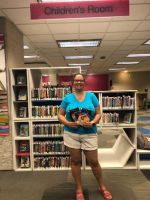
The other day I had an awesome milestone as an author: I found my books on the shelf in our public library! This might seem like a very little thing, but for me, it made my whole month. I brought my kids to the library for their weekly perusal and book check-outs, and there they were, on the New Books shelf in the children’s room.

I gushed and geeked out a bit, complete with pictures and a video for an Instagram reel, and I drew the attention of a fellow patron. She was thrilled to meet an author and excited to see good, Catholic books in the public library. After I took my pics, she eagerly added them to her own check-out pile (even more excitement for me!).

The process of getting my books in the public library was as simple as filling out a form on the library’s website. As a patron of the library, I can request titles for the library to purchase, and then they buy them. I’ve requested all sorts of books, and I’ve never had a title refused by my library.

This got me wondering if everyone knows about requesting books for your library to purchase. It is a free and tremendously helpful thing for authors, since you can only request books at your own library. Having my books at libraries is wonderful because not only can all readers have a chance to experience my books without the purchase price being a barrier, but also, some people who may otherwise not pick up my book may choose to do so since it won’t cost them a thing. My goal is to have as many kids as possible read my series, Adventures with the Saints, so having them in tons of libraries is a phenomenal way to do that!

While we’re talking about free ways to support your favorite authors (I hope that includes me!), leaving reviews is high on the list. Amazon is the biggest one, but reviews on Barnes and Noble, Goodreads, the author’s website, and anywhere else you buy the book (like local bookshops that sell online, etc.), have a huge impact and can make the difference when someone is thinking about purchasing the book. While you’re on there, be sure to “like” the other five-star reviews so they populate at the top of the list. The best reviews mention specific things that you loved and why you would recommend it, but even just taking 30 seconds on Amazon to click five-stars without writing anything helps! 

Another simple, fun, and free way to support authors is to engage with them on social media. Following your favorite authors and liking their posts is a great start, but the algorithms require engagement to boost a post. A reel or post that has a lot of comments will have more exposure, and one that has multiple shares will see the most traffic. Next time you’re scrolling, take that quick second to comment, tag your friends who would also enjoy the post, and share the content on your own feed. You can find me on Facebook and Instagram @mariarileyauthor if you want to engage with me there!

My next suggestion has less to do with increasing sales and everything to do with encouraging your favorite author: send fan mail. There is something profoundly uplifting and motivating about a reader who loved your book and wanted to let you know. Nothing brightens my day more than reading an email from a child who loved my books. Bonus points for the seven-year-old’s note that included a picture of her holding my book. Seriously, a three-minute email could be exactly the thing that an author needs to stay focused and determined when writing her next book. It might be the difference between her throwing in the towel or continuing writing. As authors, we put ourselves out there and hope that people will like and buy our books. It’s tough business. A few kind words really go a long way, and they won’t cost you a cent.

Finally, if you have a book and author that you love, tell everyone you know. There is no marketing like word of mouth, and personal recommendations are second to none. If you loved a book, chances are your friends will too. Make it a habit to spread the word about your favorite books and hopefully turn a new reader onto his new favorite author.

Of course, buying a copy of a book for yourself (and maybe two more for friends) is always the most direct way to support an author. But when the budget is tight (or you’ve already got the book), spend a little bit of time and no money at all to support us in this crazy craft of writing!

© Copyright 2023 Maria Riley

Three Things I’ve Learned from my Chickens

Three Things I’ve Learned from my Chickens

As writers, we know that one aspect of writing well is writing authentically. By that I mean we have to follow the rules of the reality we are writing about, whatever they may be. The rules governing Middle Earth are a little different than those in Narnia, for example.  If we are writing about our own world, here on planet Earth, 2023, one practice that can help us write authentically is the habit of being observant of the world around us, so that we can convey those small details in our stories. In fact, being observant might even lead to a new understanding.

What does any of this have to do with chickens, you might ask?  Doesn’t the title of this article signify something having to do with those small animals? Besides, I’m not saying anything new in that opening paragraph.

Let me begin, then, by saying that I never intended to become “the chicken lady” of my neighborhood. When my husband called from work one day, saying that a colleague had no further need of 4 unhatched baby chicks and did I think we could take them in for a while, I said “Sure” simply because I like animals and couldn’t stand the thought of those little chickies being – literally – thrown away. That was about the extent of my thinking.

Fast forward a year and a half later, and we now have 5 stout ladies who take up a third of our backyard. And they are delightful. I have become thoroughly attached to them. Through observing them closely these past several months, I’ve also learned a few things. Here are 3 of them.

  1. Habits can produce happiness.

My hens follow the same routine every day. They wake up with the sunrise, then run out to munch on the food I give them. It is always the same food, but they are nevertheless excited to see it every morning. They spend the rest of the day alternating between scratching for bugs, chatting with each other and resting.  At 7pm each evening, they gather by their gate and call for their nightly visit. I bring them some rice or a little bread and we spend time together. After a few more sips of water, and a little extra scratching, they put themselves to bed at dusk.  They follow this same routine every day. They witness to the importance of good daily habits, of doing a little bit consistently over time, every day. I often wonder what I could get done if I was such a creature of routine.

2. Don’t be afraid to try.

Even though my hens are quite content in their pen, that doesn’t mean they don’t look up and notice the green grass and fresh flowers blooming in other parts of the yard. They are always up for new ways to escape their yard to get to greener pastures. (In fact, I am convinced that whoever wrote the script for the movie Chicken Run really did have chickens.) Our Rhode Island Red, Cocoa, makes a point of pushing on the garden gate at least once an hour, just in case it has been left open. Our silver Welbar, Sandy, learned exactly where to stand so that she could fly up and just reach the tip of the fence, push off with her foot, and propel herself into the grass. They also know our habits, and often try to follow the dogs in and out.  I think they hope we won’t notice an extra pair of legs.  Even though they appreciate their home, they’re never afraid to push on the gate one more time or keep an eye out for another weak spot in the fence. They remind me not to get too complacent, but to keep looking up and trying.

3. Appreciate your community.

My little flock did not choose each other, but they’ve formed themselves into a community nevertheless. Although they are all different types of hens, they get along. Yes, there is certainly a pecking order (Sandy is at the top) but there is still room for everyone, despite their various temperaments. For example, Pebbles, our black Australorp, tends to get broody and take over the nesting box, while Pepper, a light Brahma and the smallest of the five chickens, likes to make up for her small size by being feisty and pecking everyone, including the dogs. Occasionally there are some ruffled feathers but most of the time there are contented, chatty clucks and check-ins, and at the end of the day they all go into the hen house and sleep peacefully together.  If I’ve had a hard day with a difficult person, I really notice their ability to not hold a grudge and to let bygones be bygones. It reminds me that I might not always want to spend a lot of time around a certain person or persons, but I don’t have to take everything personally and I don’t have to carry resentment with me every day. (And I’m always somewhat flabbergasted that the hens consider our two pitties part of their community!)

These are a few of the conclusions I’ve come to over the last few months, in the mornings with my coffee watching them greet the new day, and in the evenings as the sun is setting.  As I mentioned above, close observation of the world around us helps us to be better writers, and maybe even better people. These five little ladies are speaking to me all the time. Is there something that speaks to you in your life?  What do you closely observe? And is it changing you?

©Copyright 2023 by Sarah Pedrozo

Featured image from iStock-chicken (3)

Bottom two photos by Sarah Pedrozo ©Copyright 2023 by Sarah Pedrozo


Branch Out: Have You Considered Writing THIS?

Branch Out: Have You Considered Writing THIS?

A few years ago, while I was going through the discernment process to find my charisms, I was challenged to test my “writing charism” to see how I could live into it more fully. I’ve always been a writer, but I didn’t feel like I had ever found my niche in the writing world. I’d worked hard to identify my voice and hone my craft, but I still had work to do to determine where I really fit in this world of books and publishing.

Before I could narrow down the type or types of writing that felt both fulfilling and impactful for me, I needed to branch out and try some brand-new methods and projects. The result was that I not only understood myself and how God created me uniquely to touch the world much better, but I also felt invigorated and creatively inspired!

Not every endeavor was a success. I’m not good at every kind of writing that I attempt. But the process was absolutely worth it, so I thought I’d share some of the different writing styles/activities I tried. Use these as a way to spark your own creativity or embark on a new writing venture. I’d love for you to brainstorm even more ideas in the comments.

Writing Adventures to Consider:

    • Volunteer to write for or edit the newspaper for your diocese. You could cover a local event or group, write about something on the liturgical calendar, share a story about how a Saint has touched your life, etc. I was on the editorial board of my diocesean newspaper for a year, and I wrote on a variety of themes.
    • Try poetry. Even if you’ve never written poetry before. You don’t need anyone’s permission to enjoy writing or reading poetry, and it’s a style of writing that lends itself to experimentation and growth. If you’re new to poetry, here’s my guide to getting started.
    • Offer to critique a friend’s work. This activity flexes different writing and creative muscles and can be a great learning experience. Challenge yourself to write out your thoughts in a cohesive critique letter, and remember to sandwich your negative feedback between words of encouragement. We’re all in this together!
    • Submit to a magazine or literary journal. There are monthly, quarterly, and annual journals and magazines for every interest you can imagine. Brainstorm about your areas of interest and expertise. Don’t limit yourself to theological or writing craft topics. Do you enjoy talking about parenting? Fine art? Gardening? Outdoor sports? If you’re looking for Catholic resources, check out Dappled Things or Parables Magazine. Many periodicals pay for chosen submissions, so that’s a nice perk!
    • Review a book or movie. You could do this just for yourself and post it on your blog, social media, or YouTube channel, or you could submit it somewhere. But challenge yourself to write it out so you can organize your thoughts.
    • Try a completely different genre. Every genre has a unique set of tropes, themes, and reader expectations. Studying a new one may lead you on a surprising adventure. And even if it turns out to be just a writing exercise, deconstructing and learning the ins and outs of a new genre might get your wheels turning.
    • Write a short story. For even more of a challenge, write flash fiction! Shorter isn’t easier! Being forced to choose words economically for the greatest impact is often maddening, but it can lead to other things like…
    • Copywriting. A learned skill, for sure. Think about well-written book blurbs, social media posts, and marketing campaigns. Some people get good at capturing attention with concise, descriptive sentences. Listen to some online lectures or take a course to hone your copywriting skills.
    • Write a personal essay. Penning a mini-memoir is a great way to process your thoughts. Consider taking a theme or issue and sharing your experience with it in a way that connects to your readers (rather than just recounting events sequentially). In that case, you have great material for a personal essay that you can try to get published in a relevant periodical or online.
    • Participate in NaNoWriMo. November is National Novel Writing Month. Writers from all over the country choose to try and “win” the NaNoWriMo challenge by writing 50k words in one month. Usually, people choose to draft a new novel, but you can use the resources, and community NaNo provides to knock out any project you have on your plate. 1,667 words a day… and go!

You don’t have to wait until you have the dreaded writer’s block to give something from this list a try. Consider it creative procrastination—I mean, a brain break! And keep an open mind to what you may learn about yourself and your writing affinities.

Copyright 2022, Anjanette Barr

A Change of Attitude

Last year was the first year we did a homeschool co-op with our children. It was just our second year of homeschooling and we were still getting used to our “new normal.” The co-op just met twice a month on Fridays, and the classes were fun and interesting.

But, on most days, we didn’t want to go. We were tired. The co-op felt loud and stressful. I taught two classes and needed to get lesson plans added to my week. The children didn’t sit still and raise their hands.

Then, after a few meetings, I didn’t like how much we were complaining, I realized what needed to change was my attitude. I changed my “I have to” to “I get to,” and things got more enjoyable very quickly. I took it for what it was, not what I wanted it to be or what I was used to school looking like.

I’m trying to take this new attitude into my writing life now. I have four drafts of novels written, and they all need to be…oh, it’s dreadful…edited.

Writing seems easy—taking an idea and getting it down is something I can do with just a few times of perseverance needed. I enjoy that part of the process. Editing, on the other hand, feels like work to me. The words can’t just flow—they’re already there and need to be made better. Add more dialogue. Develop the characters more. Add descriptions and take out redundancies. Editing is work.

But editing is work I get to do.

I was able to accomplish the huge task of finishing a first draft amidst a life where I homeschool, volunteer, garden—I won’t list everything out. I have a family who is very supportive and wants to see my next book out into the world for people to read. I get to delve into this story and this world I imagined and make sure it comes to life for the readers. I’m grateful I have a life that is balanced enough that, most days, I can find a small pocket of time to work on my books.

In fact, as soon as I finish the draft of this blog post, I am going to begin the editing process. But, first, let me write out a prayer to say every time I sit down to edit.

Eternal God,

Thank you for this day and for the gifts you have given me. As I take some time to edit this book today, please let me be thankful. Guide the story and help me make it come alive. Help me to remember that you gave me the gift of writing and gave me the idea for this book. This is an activity that I get to do and I am grateful.

Amen.


Copyright 2022 Sarah Anne Carter

Creating a “Social” Social Media Presence

Creating a “Social” Social Media Presence

During last month’s Catholic Writers Conference Live in Chicago, I was blessed to offer a presentation on the importance of creating a truly “social” social media platform. Flat posts that bombard followers with “salesy” type content does not help build the loyal readers most writers desire when launching a social platform. Since forty-five minutes is never enough for this verbose girl to share all that’s in her head on the subject, and for those who could not attend, I’ve decided to do a little series of posts on some best practices and fun tips.

A well-crafted and curated social media presence begins with deciding which platforms best suit your intentions, personality, and potential audience. Great news—no, seriously!—you do not need to be on all of the social platforms; you don’t even need to be on more than one. Pick one, do that fabulously (or even haphazardly), and you’ll not only find it less stressful but might even (gulp) find you really enjoy social media! For many of us, it is striking that balance between building credibility, being authentic, making friends, and protecting our privacy, all while not becoming too salesy or burning out.

Let’s Start With Setting Boundaries

Prayerfully decide what you feel comfortable sharing, especially if what you share isn’t yours to share, aka your children’s stories.

Don’t give into pressure to follow all the trends. Yes, be aware of what social trends are increasing reach and engagement, but if you don’t feel comfy following them, don’t! For instance, I love Reels. I see the very clever ones where words pop up, and people point to them while jazzy music plays in the background. This method is not for me! So, I’ve experimented with different Reel techniques, and while maybe I don’t get millions of views or followers, I know I’m staying true to myself and trusting the Holy Spirit to guide the message I’m portraying to whomever is meant to see it.

Be You! Always be you. Don’t create an avatar version of yourself. People will eventually see right through that and drop off following your posts. Readers want to know the authors. You know; you are readers as well! Turn the tables and consider your favorite authors. Do you NOT check out all you can about them? Website, bios, social? Whatever you enjoy discovering or engaging in as a reader, try to provide that same experience for your current and potential readers!

To be seen or not to be seen is an important question. If you need separate personal and business platforms, that’s fine, but make sure your public platforms are public! If you are using social media to be discovered, to invite others to share your materials, and to interact and be social, then make sure people can find and follow you easily! This is super important if you are writing for any online publication that wishes to share your posts and tag you, such as CatholicMom.com. As their Social Media and Digital Specialist, I get so frustrated when I am trying to help one of our contributors by sharing their awesome articles but either can’t find their social platform, or when I do, permission to tag is not granted.

Post as often as fits your schedule, and don’t stress when you can’t. Like loyal friends, your followers will still be there two days (or weeks) from now!

Next month, I’ll share the importance of discerning your motivations and weighing the benefits of launching or maintaining a social media presence. Social media may not be for everyone. Many people have to (or want to) step away from Facebook, Instagram, and Twitter and may be weary of exploring TikTok. They may be looking to maintain a website only. I can respect that. However, let me leave you with one question to ponder: How will potential readers find that website?


P.S. Don’t miss the fabulous Catholic Writers Conference Online on February 24-26, 2023!


Stay in the Know

Join Our Newsletter

Members and supporters can get the latest on CWG news and events by signing up for our newsletter.

Please wait...

Thank you for signing up!

Catholic Writers Guild
P.O. Box 77
Eaton, IN 47338